Diablorama · Alpes vaudoises et Saanenland

The region · Stones & stories

Remarkable stones & mysteries

Enigmatic standing stones, hollowed rocks and giants left by glaciers: eight encounters with the landscape’s memory, from the Ormonts to the Chablais.

The Bloc Monstre in the Dévens forest, Bex
Arkelin / Wikimedia Commons · CC BY 4.0

Les Ormonts

La Forclaz · Ormont-Dessous

Menhir du Tomeley

A solitary 4.7-metre silhouette in a meadow at about 1,408 metres. Listed in 1970 as a prehistoric menhir, it is also described as a “natural menhir”: whether humans erected it remains uncertain.

The solstice story

Jean-Adrien Lavanchy linked the stone to light and shadows around the Tours d’Aï and de Mayen at the summer solstice. A fascinating symbolic interpretation, without established proof of a prehistoric calendar or Celtic origin.

Sources & further reading

Les Diablerets · Ormont-Dessus

Pierre à Bridel

The canton lists a glacial erratic under this name, protected since 1959. The SSDI inventory places a Pierre à Bridel on the Mauvais Glacier moraine, at around 2,700 metres.

A name and an identification problem

The SSDI notes confusion with the Pierre aux Fées in an old list of historic monuments. References to foot-shaped marks therefore require caution: the two stones should not be conflated or taken as evidence of prehistoric footprints.

Sources & further reading

Fenil Durand · secteur du Pillon

Pierre aux Fées

Above the Pillon road, beside the old path, this roughly four-metre boulder bears around ten hollows shaped like the soles of feet. The SSDI record places it at about 1,420 metres, at Fenil Durand.

Fairy footprints?

Its name invites a fairy tale, but the marks are classified as natural weathering features. They are not confirmed prehistoric human or dinosaur footprints. The documented location is Fenil Durand; a location near the Dar waterfall has not been confirmed.

Sources & further reading

Isenau · près du chalet La Crête

Pierre à cupules d’Isenau

An old description records four aligned cupules on a stone near Chalet La Crête, in the station area at around 1,760 metres. Cupules are small hollows, not a trail of fossilised footprints.

A missing or moved stone

The inventory suggests it may have been moved or destroyed when the area above the chalet was redeveloped. Its current position and survival remain unverified. It is presented as a documented record, not a guaranteed visit.

Sources & further reading
Chablais

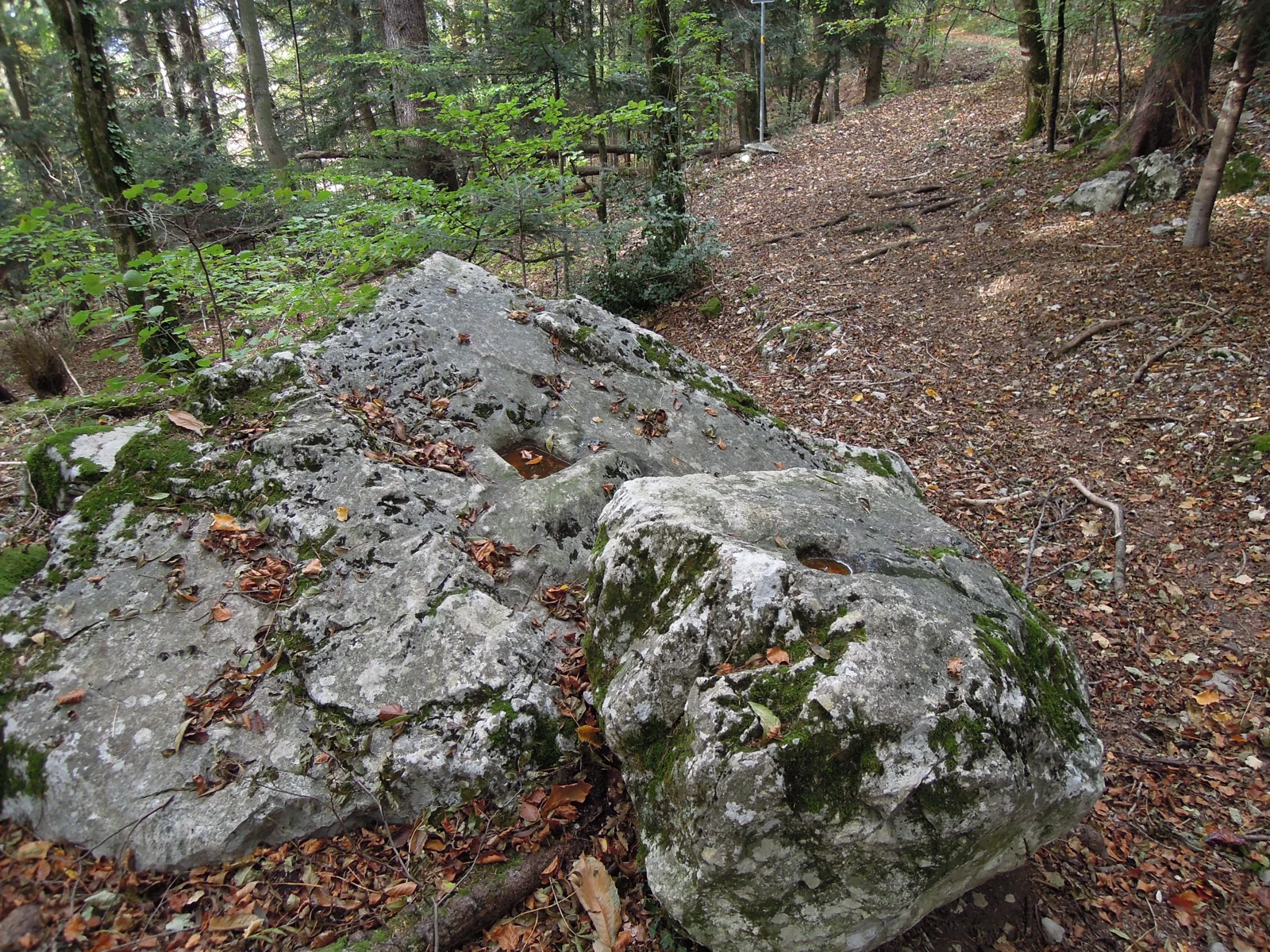
The two hollowed stones beside the Pierre du Chevrier, near Yvorne
Eric Butticaz (GnomeBossu) / Wikimedia Commons · CC BY-SA 3.0

Au-dessus d’Yvorne · secteur Vers-la-Ryt

Pierre du Chevrier

Also called the “Druids’ Stone”, it is associated with two neighbouring small limestone blocks bearing a round hollow and a rectangular basin, described in the SSDI inventory.

Intriguing hollows

The hollows and the rock’s nickname evoke ancient rituals. Their purpose and date are not established by the sources presented here: the link to druids remains an interpretation.

Sources & further reading
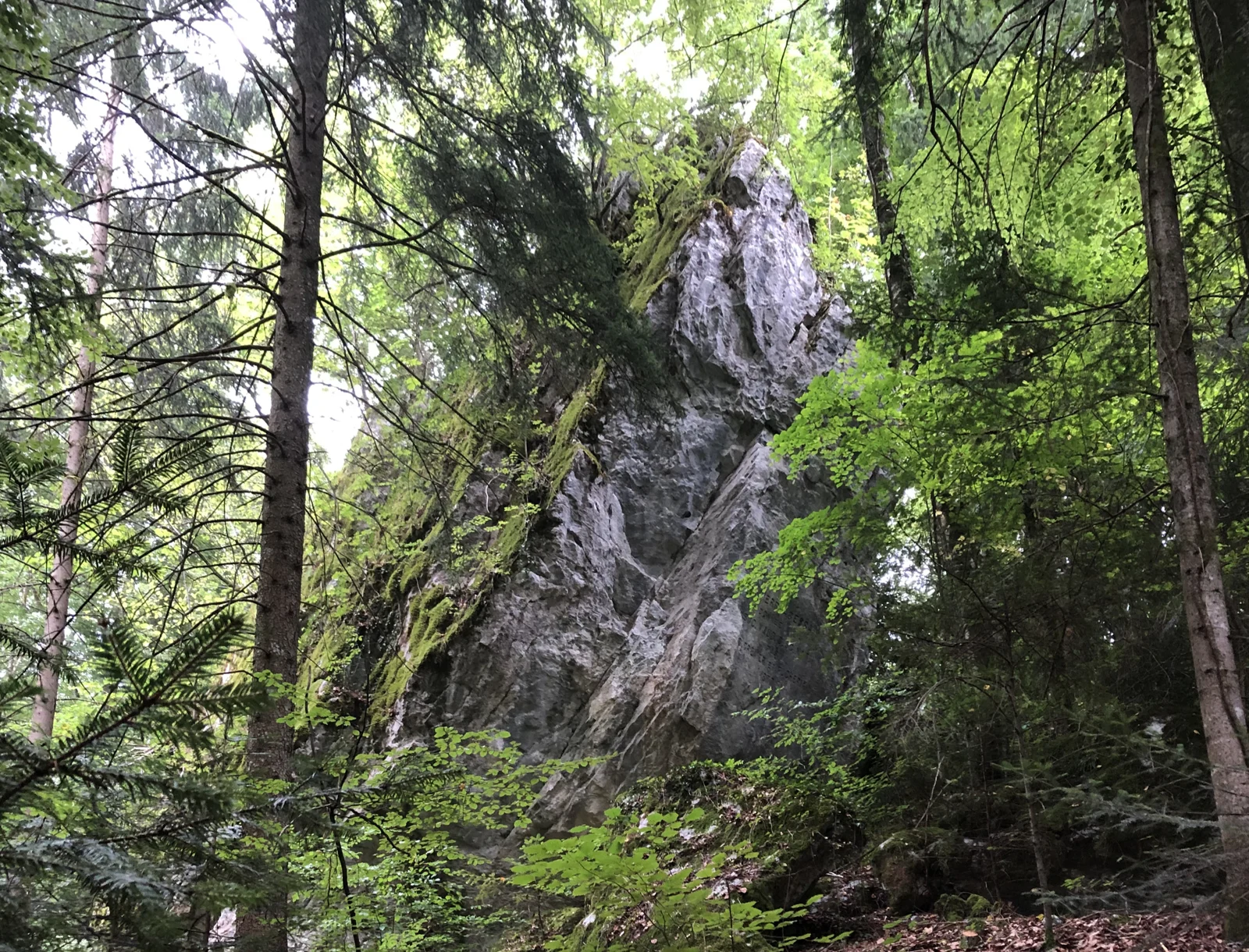
The Bloc Monstre in the Dévens forest, Bex
Arkelin / Wikimedia Commons · CC BY 4.0

Bex · forêt du Montet

Bloc Monstre

This limestone giant was transported by the Avançon glacier. Jean de Charpentier, director of the salt mines in the 19th century, named it and used it to support glacial theory.

How did it get here?

Its unusual position posed a real scientific puzzle: how could such a rock move? The glacial explanation transformed our understanding of the Alps. The Salt Trail signs mark a detour to the boulder.

Sources & further reading
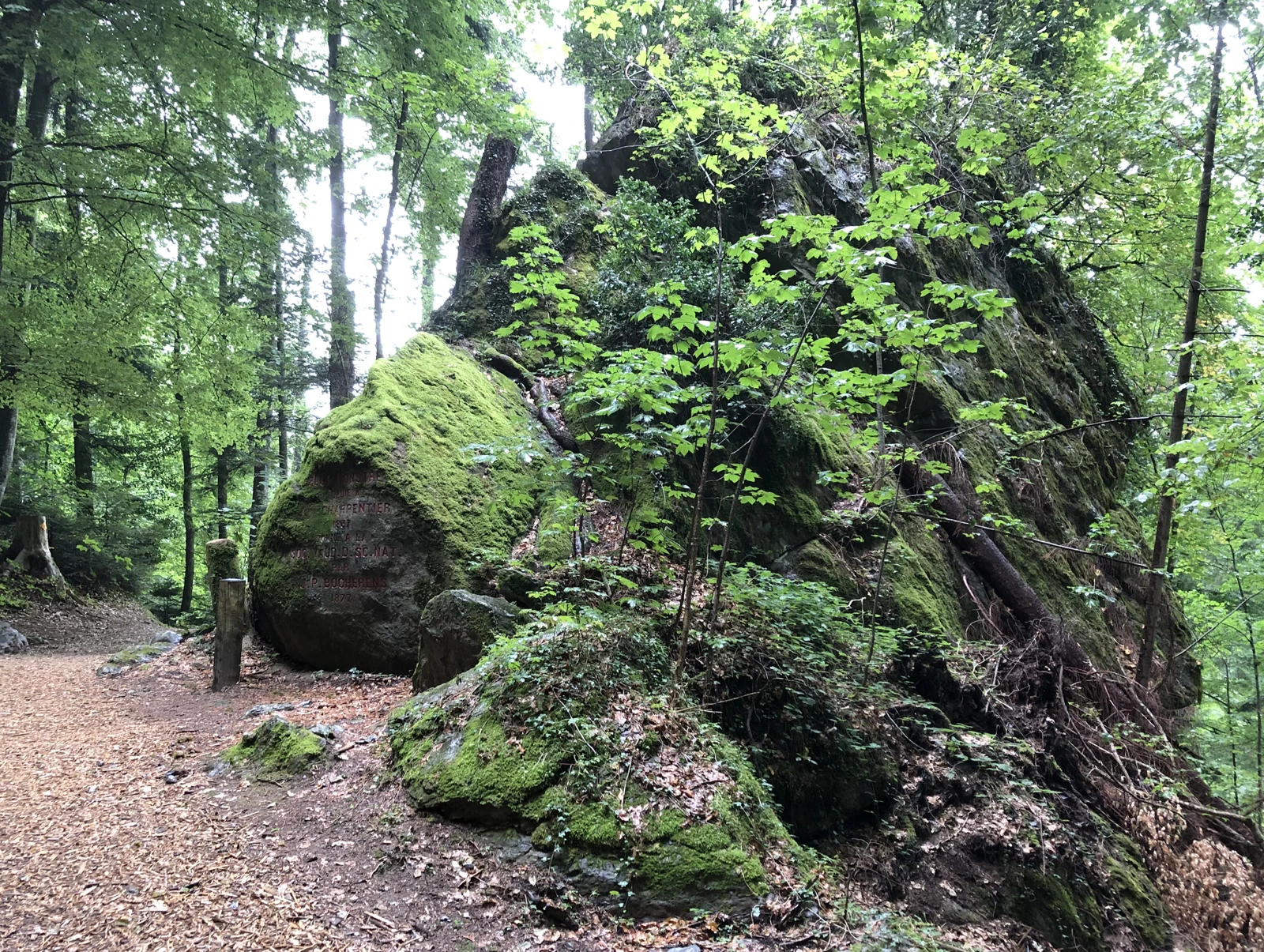
The Pierra Bessa in the Dévens forest, Bex
Arkelin / Wikimedia Commons · CC BY 4.0

Bex · près du Bloc Monstre

Pierra Bessa

Near the Bloc Monstre, this other huge rock was also deposited by the Avançon glacier. Both boulders intrigued 19th-century geologists.

Two witnesses to a vanished world

Among the trees, imagine the glacier that once occupied this place. Discover their shared history at the Dévens erratic-boulder geosite: a geological story rather than a menhir legend.

Sources & further reading
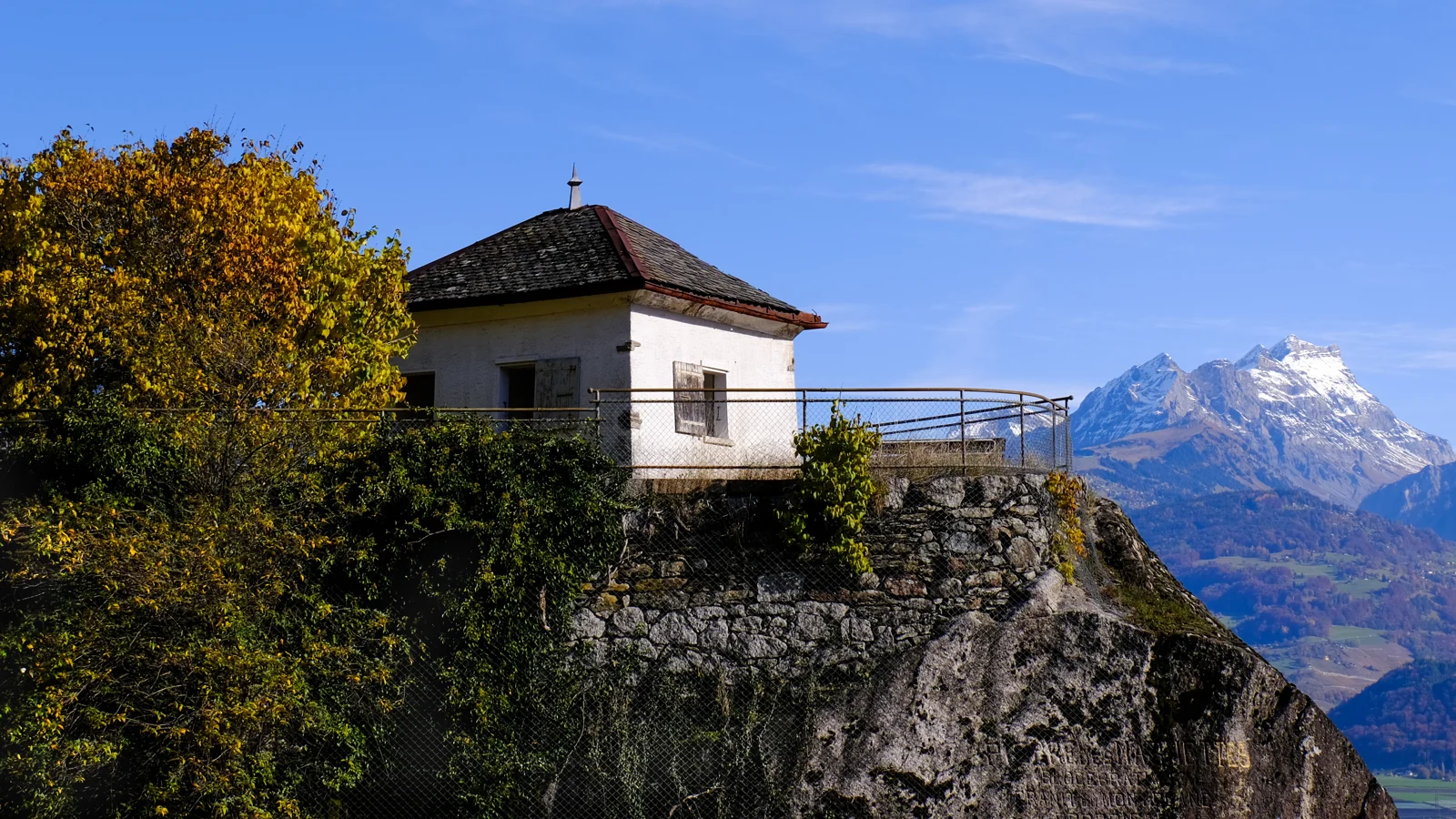
The Pierre des Marmettes and its hut, Monthey
Christian David (Espandero) / Wikimedia Commons · CC BY-SA 4.0

Monthey · Chablais valaisan

Pierre des Marmettes

A glacial boulder about 19 metres long and 9 metres high. Its size is striking, but its survival tells a human story too.

The giant saved from quarrying

In the early 20th century, it risked being cut up for building materials. The campaign to save it contributed to Switzerland’s nature-conservation movement. An educational trail introduces Monthey’s glacial erratics.

Sources & further reading
A tableTakeawayA room